
Whereas we had a little rain in early August, September has been pretty dry to the point of moderate drought conditions (Figure 1; see www.drought.gov for more info). The blue lines show total precipitation (inches) and the green line shows air temperature (°F) at the MET station, which is located in Crooked Bayou, close to Point aux Chenes.
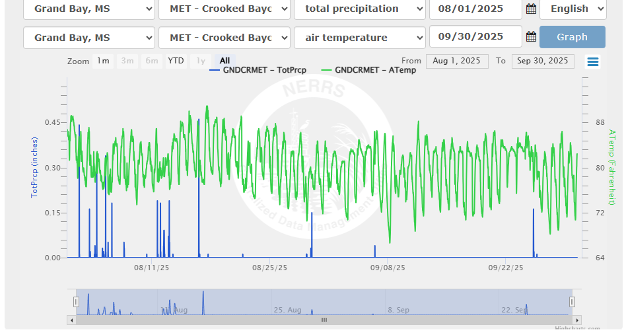
Figure 1. Precipitation and air temperature from August through September, from Crooked Bayou MET Station. https://cdmo.baruch.sc.edu//dges/.
One upside with the lack of precipitation and run-off is that the low dissolved oxygen that plagued Bayou Heron almost all of August has improved! This graph (below; Figure 2), from the CDMO website, shows that DO started ascending safely out of the hypoxic zone (of 2 mg/L) on the last day of August! We hope it stays that way for the fish and invertebrates’ sake, though we’re not so keen on drought conditions.
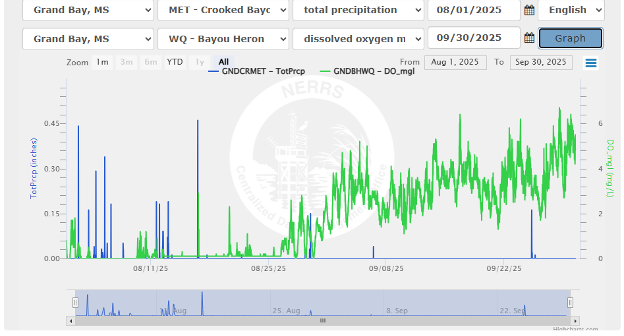
Figure 2. Precipitation from Cooked Bayou MET Station and dissolved oxygen from Bayou Heron SWMP Station, in August and September. https://cdmo.baruch.sc.edu//dges/
With the drought conditions ongoing in September, snakes and other reptiles were coming out onto the roads in the NERR and were generally out and about looking for water. Lucky for them, we all “Brake for Snakes” (and turtles).. and well… anything we can help move off the road to safety.

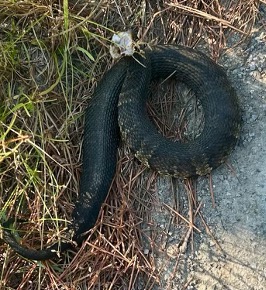
Figures 3 and 4. Hatchling speckled king snake (left) and water moccasin, or cottonmouth snake (right). Photos by R. Lipscomb.
Roy, our resident DMR Marine Patrol Officer, moved a few snakes off the road (see Figures 3 and 4) and rescued a very tiny box turtle (Figure 5), which he returned to the savanna after it was used as an animal ambassador for our National Estuaries Day Celebration (see below).

Figure 5. Tiny box turtle rescued from the road. Photo by R. Lipscomb.
This little anole was captured (via video) on our front deck licking the morning dew off the planks! Poor little guy was so thirsty! (video by J. Pitchford).
And along the lines of thirsty reptiles (and amphibians), our Education Team hosted a Frog Call Workshop for visually impaired veterans from the Gulf Coast Veterans Health Care System out of Biloxi. In this class Andrew Heaton discussed some common frogs found in south Mississippi and taught participants that frogs can be identified by their calls. While listening to the calls, participants practiced identifying different calls and coming up with clever ways to remember them. You can check out these calls on YouTube (Figures 6 and 7). Andrew Heaton compiled this resource to help our veterans gain more access to the natural world around them, as well as practical experience using new and helpful technology.

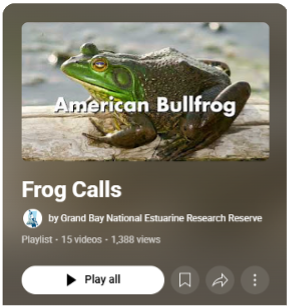
Figures 6 and 7. https://youtube.com/playlist?list=PLPpro2tivePIP7jCG5mHWKIXTLpyibuYW&si=DHbmCHGRDaZ7KExd. YouTube playlist of frog calls, compiled by A. Heaton.
We had a big weekend the final weekend of September – with our National Estuaries Day Celebration that we hold every year at our Coastal Resource Center. Andrew Heaton, our very own Herpetologist (someone who studies reptiles and amphibians), went out to find some cool reptiles and amphibians, as well as other creatures, for the public to get an up-close view of. And he captured a beautiful little American Alligator (Figures 8 and 9)! He released the gator right after the event was over.
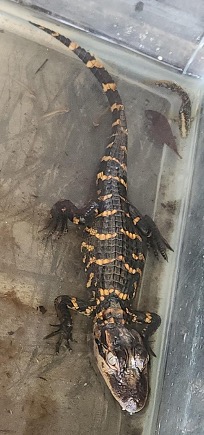
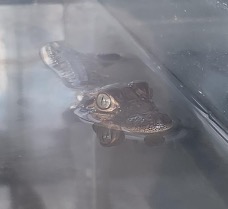
Figures 8 and 9. Young American Alligator captured in the NERR. Photos by C. Porter.
And that Friday, amidst all the planning and staging for Saturday, Andrew also found a rare and endangered Red-bellied cooter (Figure 10)! Which meant he needed to mark, tag, and get a DNA sample from her, before letting her go again. We had the privilege of observing this big girl and watching Andrew do his work to assist the Fish and Wildlife Service with a long-term mark and recapture project to determine the status of our local population, monitor trends over time, and to assess the status of hybridization across their range.
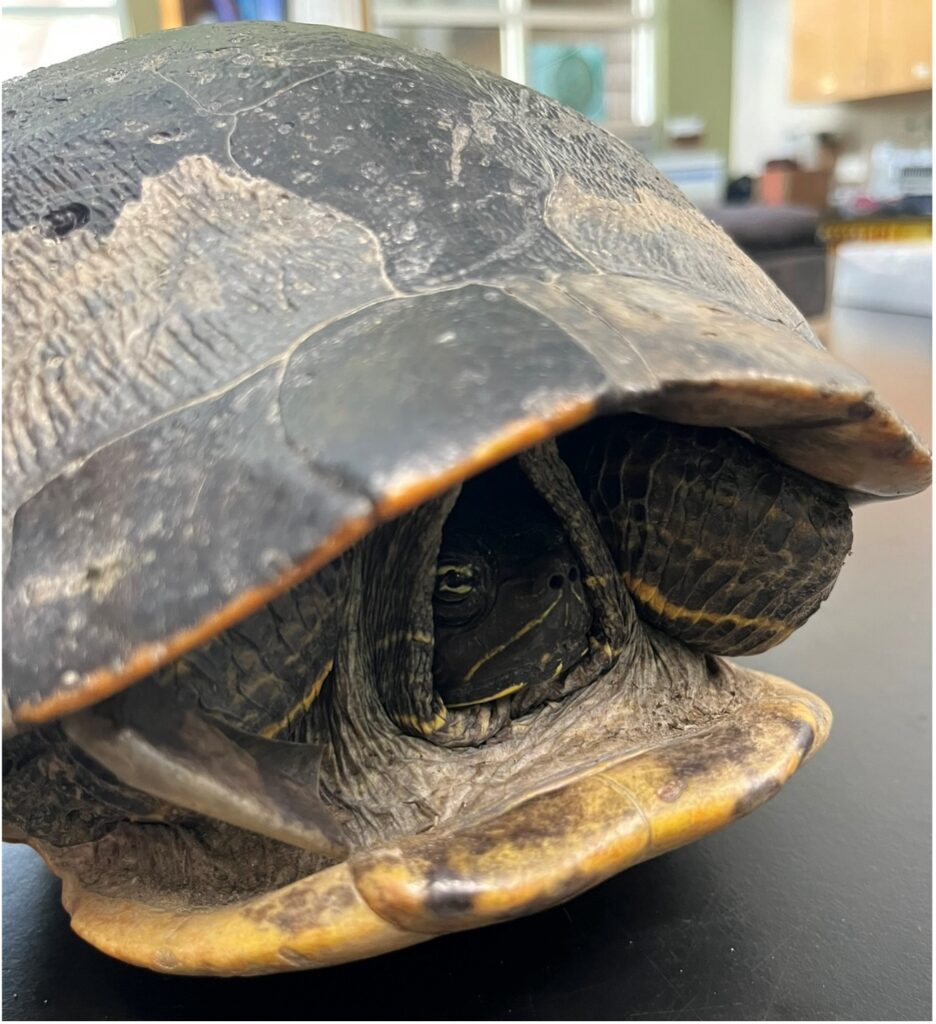
Figure 10. A large, endangered Red-bellied cooter. Photo by J. DeBose.
Figure 11 shows how Andrew implanted a tiny PIT (Passive Integrated Transponder) tag into her back leg, so they can keep track of how often, where and when they see her. PIT tags are ‘read’ by a wand-like instrument that you pass over the animal. A lot of pet owners use these kinds of tags in their own pets.
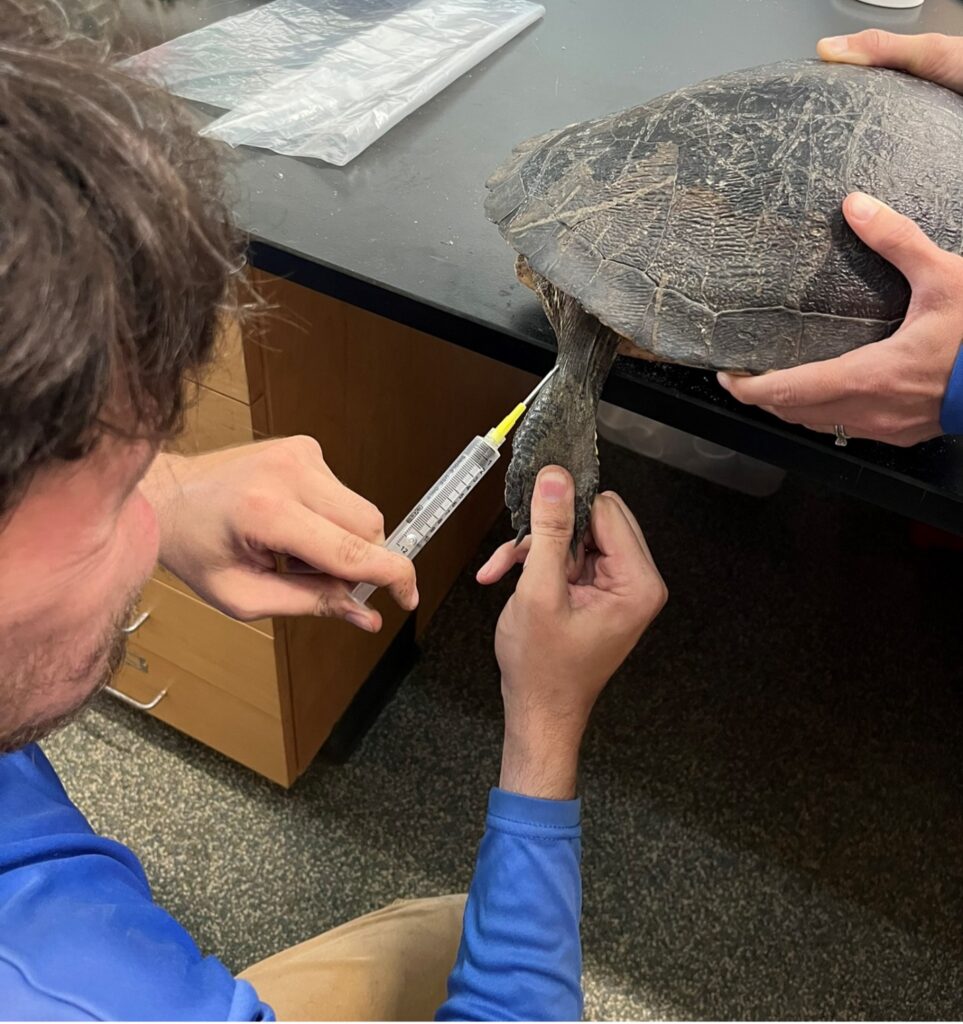
Figure 11. A. Heaton injects a ‘PIT’ tag into the back leg of the cooter. Photo by J. DeBose.