

We have certainly made it to “the dog days of summer” around here… with temperatures climbing into triple digits and frequent afternoon storms, a lot is happening here in terms of phenology!
Phenology, if you have never heard of it, is defined as the study of the timing of seasonal/cyclical life stages and phases in plants and animals (such as flowering, fruiting, migration and metamorphosis) influenced by several abiotic factors. These factors include large scale components such as water availability, day length, and temperature as well as more localized factors like altitude, slope, shade and nutrient properties. Timing is the most critical factor involved in phenology and can determine the success of one species, or multiple species that might rely on one another to proceed with their own life stages and cycles. An example of this multispecies relationship is that between milkweeds (Asclepias sp.) and monarch butterflies. During the spring through the summertime, monarch butterflies will lay their eggs on milkweeds leaves. The caterpillars that emerge rely on the milkweeds foliage to provide the nutrition they require to pupate and emerge as adults.
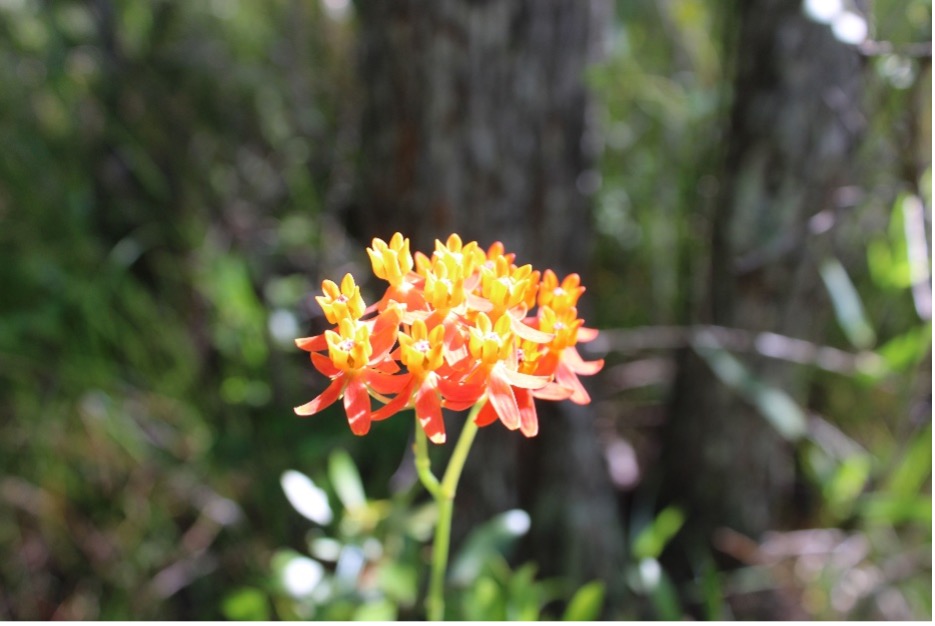
Figure 1. Fewflower Milkweed (Asclepias lanceolata) in bloom. July 2025
During the summer months, many plants around the Reserve can be seen producing flowers of various colors and shapes. These flowers often showcase large petals or ray flowers that are designed to attract bees and wasps to their sweet nectars in exchange for transporting their pollen to other nearby individuals of the same species. The interaction between plants and pollinators is often essential for cross pollination and the reproduction of plants via fruit.

Figure 2. Largeleaf Rose Gentian (Sabatia macrophylla)

Figure 3. Bartram’s Rose Gentian (Sabatia decandra)
Some flowers have obvious petals like Bartram’s Rose Gentian (Sabatia decandra), a state listed species in the Rose Gentian family (Gentianaceae). This species is characterized by 10 fuchsia-colored petals and a vibrant star-shaped center where the flowers reproductive parts (stamens and pistils) protrude. S. decandra and other members of the Gentianaceae family, exhibit flowers with radial symmetry that both visually attract pollinators and allows for them to access the nectars and pollen from several different angles.

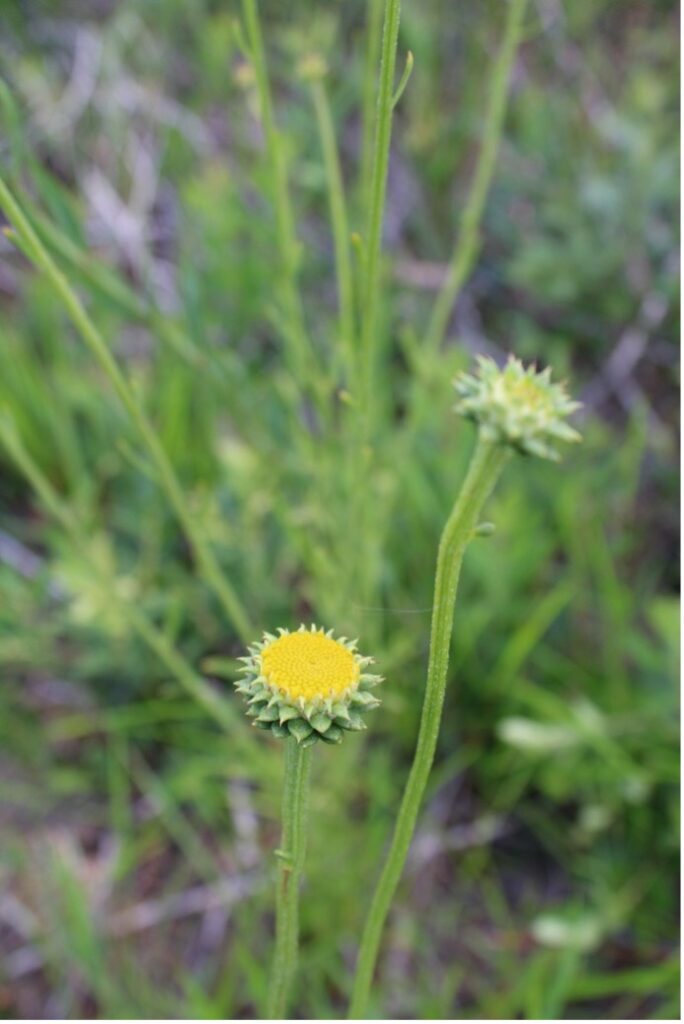
Figure 3 and Figure 4. Grass-leaf Barbara’s Buttons and Oneflower Honeycomb head (Balduina uniflora) are two members of the Aster family that have composite flower types. B. uniflora is only showing disc flowers at this time of the year, the ray flowers will grow later this summer into fall.
Grass-leaf Barbara’s Buttons (Marshallia graminifolia), on the other hand, consists of many less apparent and reduced petals and parts. The Aster family (Asteraceae), which this plant belongs to, are often characterized by having composite flowers. Composite flowers consist of two types of flowers, disc flowers and ray flowers. The disc flowers are found in the center of the flower head are reproductive, containing both male and female parts. Ray flowers give the appearance of petals to composite flowers, but most often contain only female, or sometimes male flower parts rendering them non-reproductive or sterile. The ray flowers often fall off as the flower begins to mature and fruit production in the disc flowers begins.
In addition to high temperatures, ample rainfall and longer periods of daylight during the summer months, prescribed fires during the growing season also contribute to phenology of several fire adapted species at the Reserve. One example is the synchronized blooms of Savanna Meadowbeauty (Rhexia alifanus) a species with large bright pink flowers with bright yellow pollen stamens and pistils in the center. Another example of a species “fueled by fire” is Toothache grass (Ctenium aromaticum) which emerges in patches across the landscape and produces tall inflorescences (the flowering and fruiting heads) that resemble toothbrushes or combs.
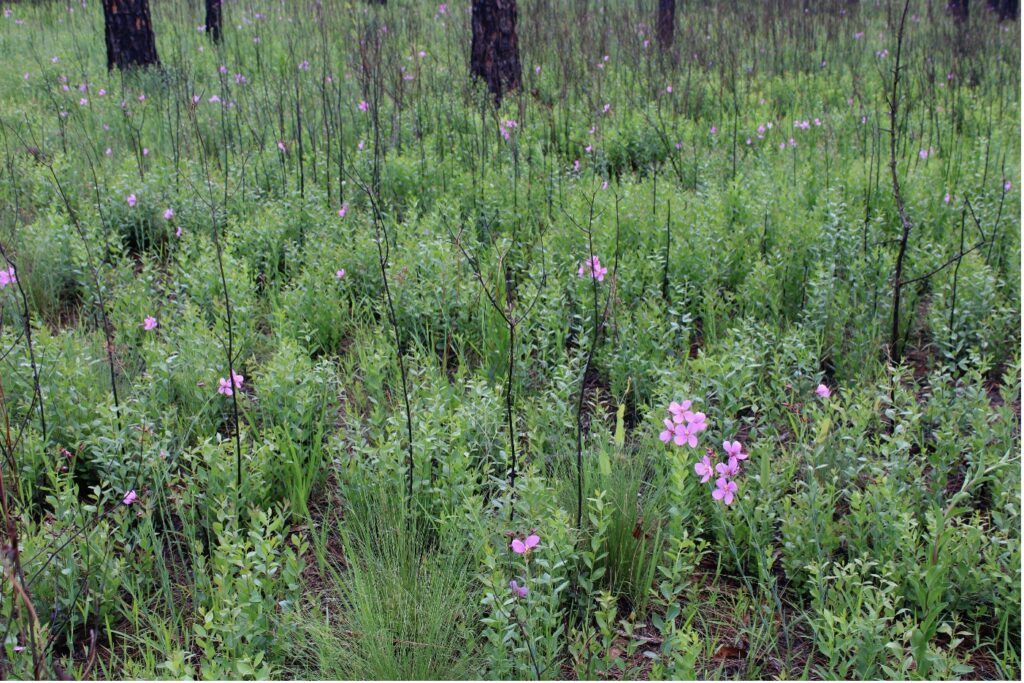
Figure 5. Savanna Meadowbeauty (Rhexia alifanus) blooming in the pine savanna that received a prescribed fire about two months ago.

Figure 6. Toothache Grass (Ctenium aromaticum) with flowers seen at one of the areas that received a prescribed burn in late May.
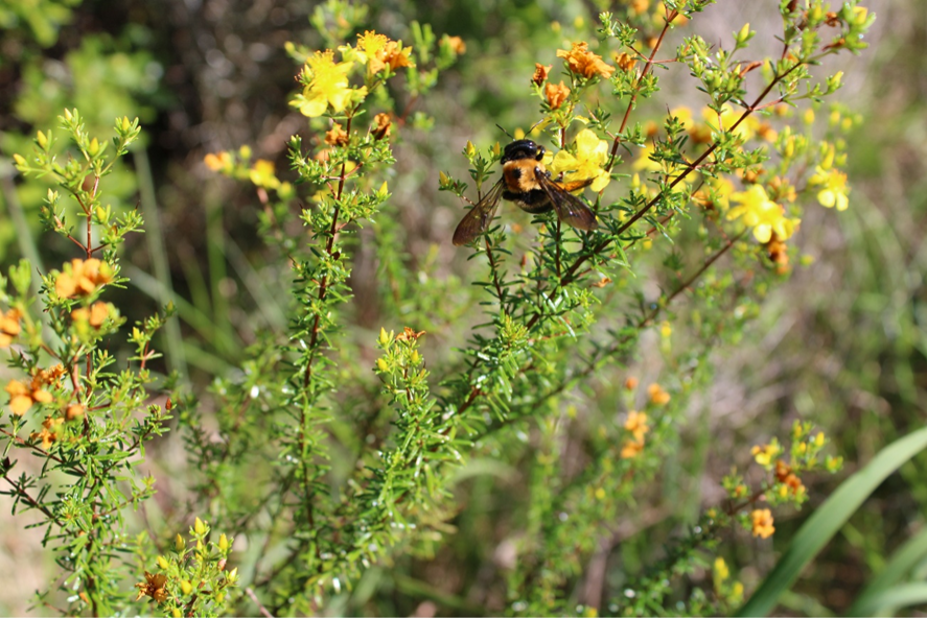
Figure 7. An eastern carpenter bee (Xylocopa virginica) is busy at work pollinating a St. John’s wort (Hypericum spp.). These bees utilize buzz pollination techniques in which they use their powerful thoracic muscles to dislodge pollen from the anthers (male flower parts) of flowers making them highly effective pollinators for a variety of native plant species.
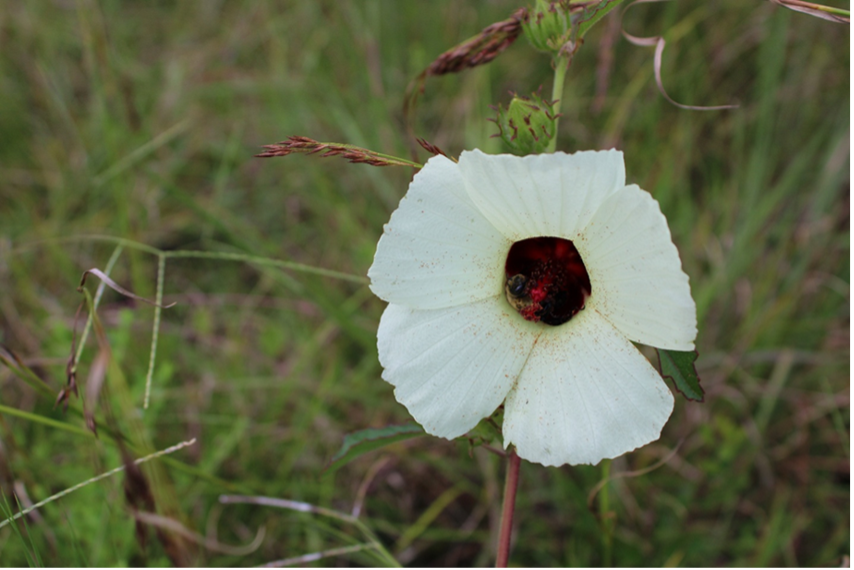
Figure 8. Pollinators like this Bumblebee (Bombus spp.) may travel many miles from their home in search of nectars. The job of pollinating can be very tiresome, and sometimes these hard workers need a break. Bees will take naps inside of flowers that can last anywhere from a few minutes to a few hours.
The next time you are out observing the natural world at The Grand Bay National Estuarine Research Reserve or other local parks, take a minute to slow down and appreciate the phenology happening all around! Smell those flowers, admire the pollinators and other insects interacting with plants, and always remember to bring extra water and sunscreen with you- the dog days are meant for taking it slow and appreciating all the changes happening in nature as we transition towards cooler weather in the Fall.