
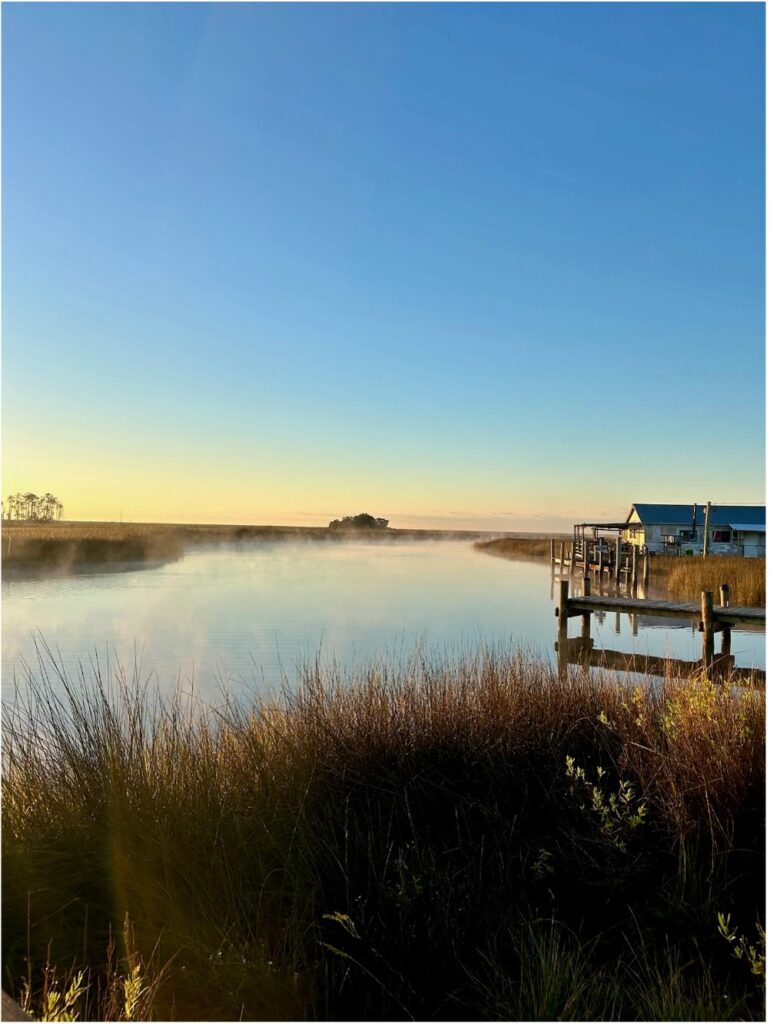
Figure 1. Fog over Bayou Heron. Photo by R. Lipscomb.
We had quite a few foggy days in November. Roy took a beautiful photo of a quiet foggy morning at the Bayou Heron boat launch (above).
It was a bit of a rollercoaster ride for temperatures in November, too. Air temps ranged from around 24°C (75°F) to 12°C (54°F) (in green on the graph below). Our shallow depths had the water temps (blue on graph below) tracking the air temps pretty consistently, though a few times you might notice some blips from when the sonde would be out of the water during very low tides.
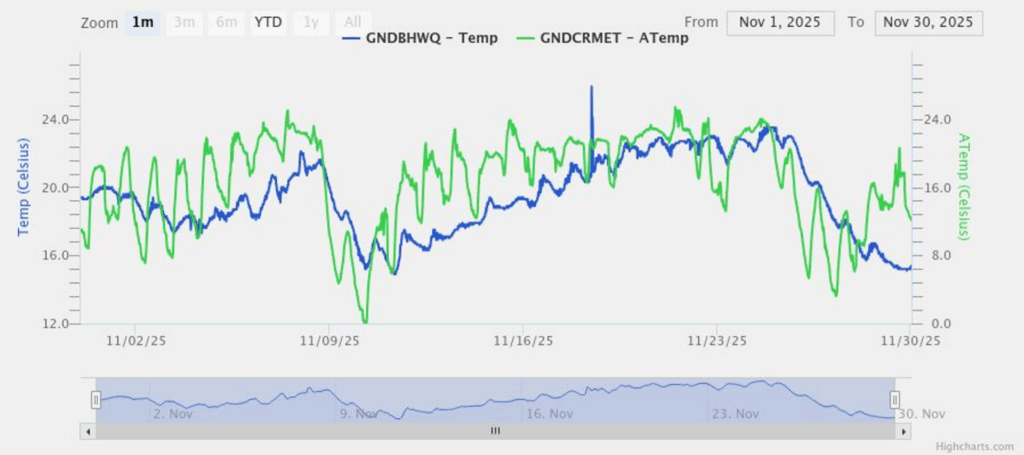
Figure 2. Air (green) and water temperatures (blue; Bayou Heron) in November. From CDMO website: https://cdmo.baruch.sc.edu//dges/
And speaking of low tides, we had some pretty extreme tides (for us!) this past month – hopefully everyone avoided getting stuck in the mud! The graph below shows the depth reading from our sondes in Bayou Cumbest and Bangs Lake – it’s a nice picture of the tidal cycle in our area, which, compared to other NERRs, is not that extreme.
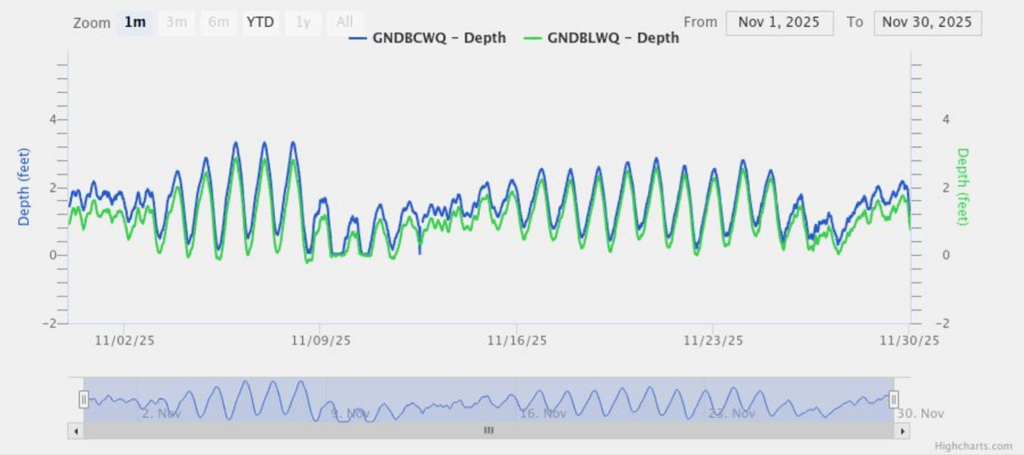
Figure 3. Depth of water in Bayou Cumbest (blue) and Bangs Lake (green), determined by datasonde. From CDMO website: https://cdmo.baruch.sc.edu//dges/
We also got to help out with Bat Surveys! Our own Emmett C. and MSU’s Mandy R. lead the charge in trying to document the bat population in our area along the northern Gulf Coast. Mandy conducted acoustic surveys for her Master’s degree so she has an idea as to who is around (in terms of possible species and when). But to get a real understanding of which species are here and how they are doing, you need to mist-net them, or catch them in fine, very tall nets as they fly through laneways at night.
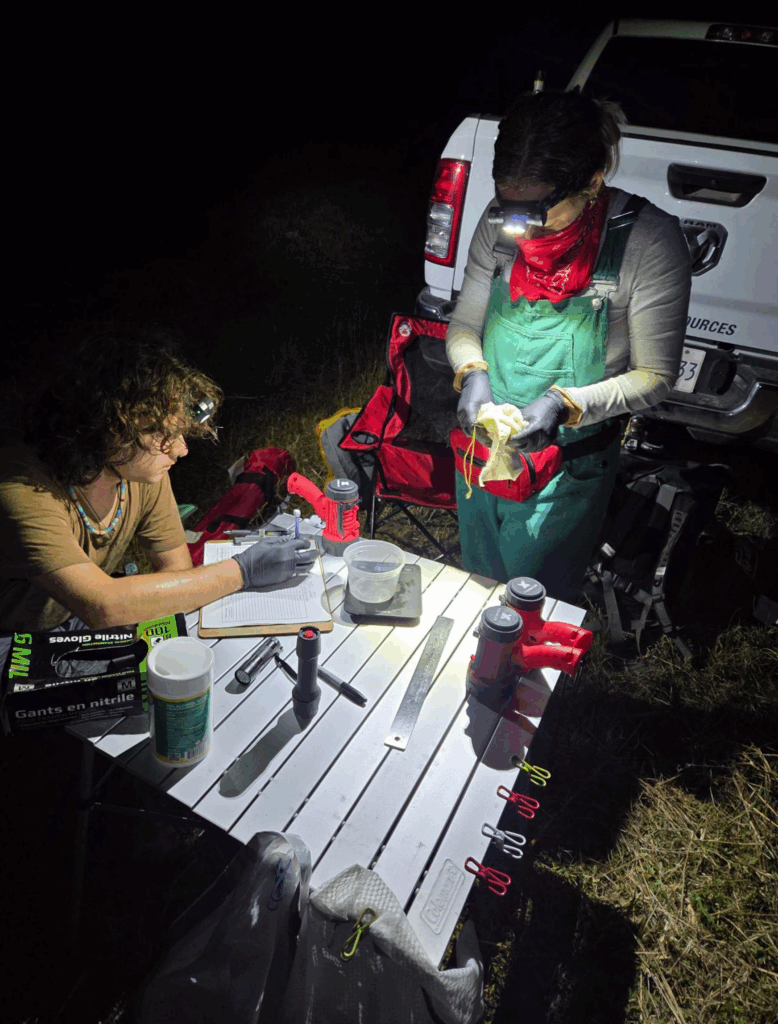
Figure 4. Bat ‘weigh station’ set up in Grand Bay NERR. Photo by A. Heaton.
We check the nets every 10 minutes to make sure they aren’t trapped for too long and don’t chew their way out again. It’s a long day’s work but so rewarding when we catch one (or more!). When we do catch one, the handler (they are trained and vaccinated) gently removes the bat from the net, places it in a bag and brings it to the ‘weigh table’ where it is weighed, measured, sexed (determined if male or female), and aged. After this fairly quick work, the bat is let go to fly away.
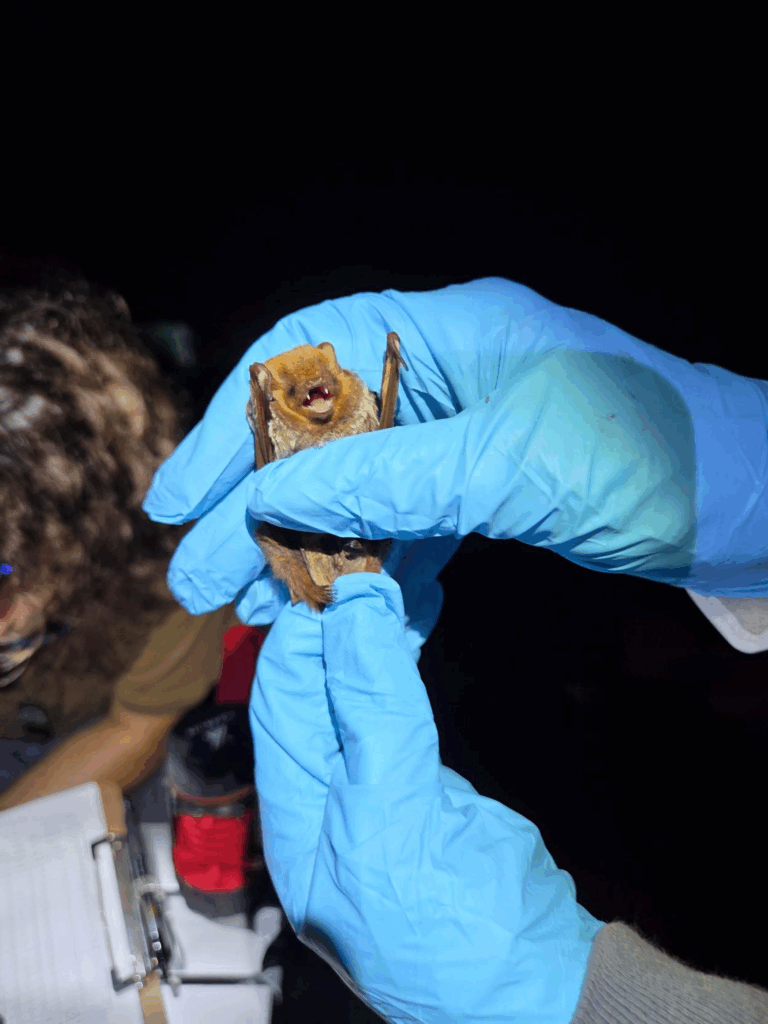
Figure 5. Seminole bat captured in Grand Bay NERR. Photo by A. Heaton.
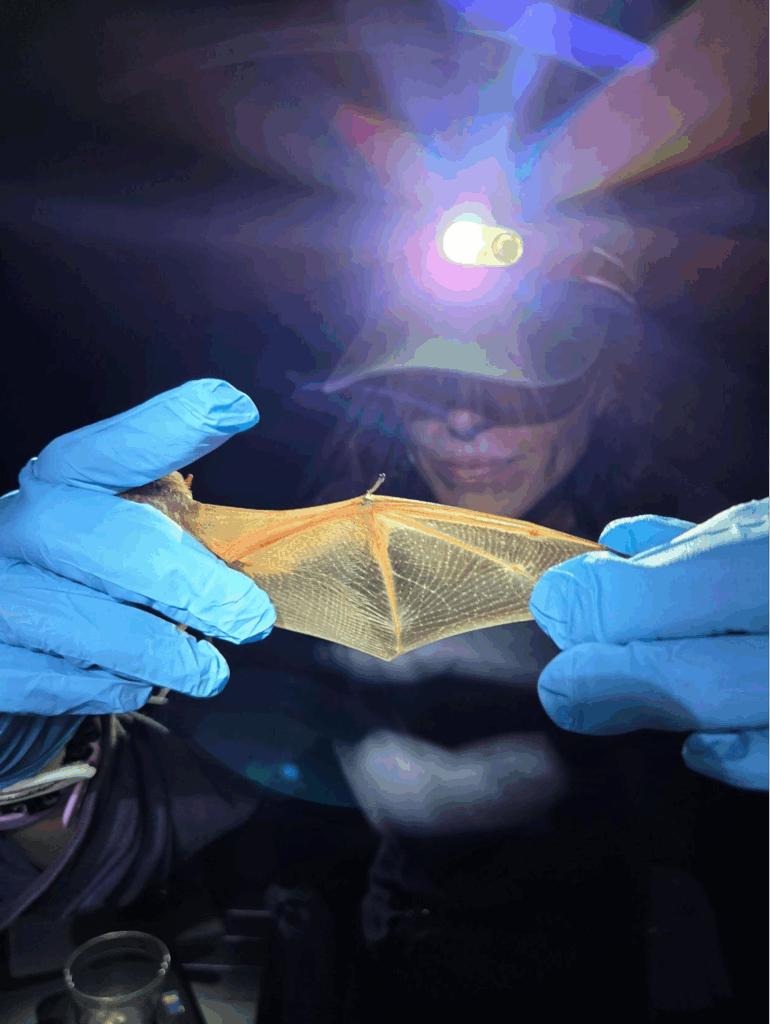
Figure 6. Emmett checks the Seminole bat’s age by looking at the finger joints. Photo by J. DeBose.
We also had another large log, or piling, wash up in Point aux Chenes Bay. It happened to be a beautiful glassy day out on the water and we saw a bunch of birds (cormorants) just hanging out, preening themselves on it. Just a reminder to always keep an eye out for boating hazards!
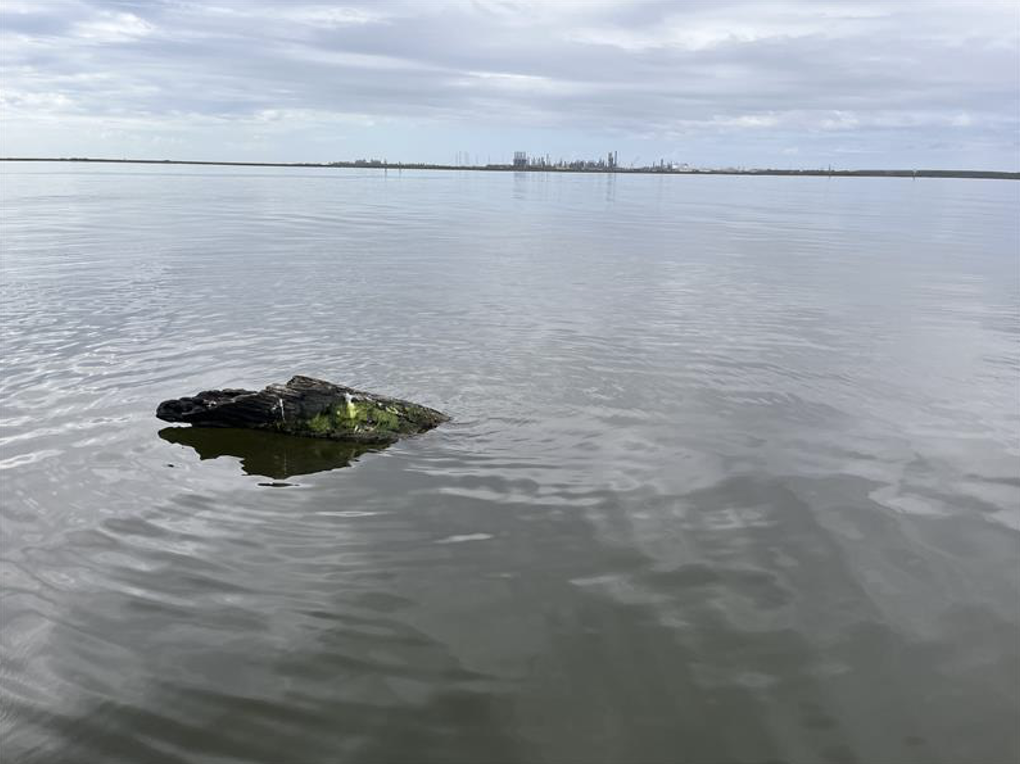
Figure 7. Large log floating in Point aux Chenes Bay. Photo by J. DeBose.